Graveyard · Metaverse · Web3 Gaming
The Web3 Gaming Graveyard
Explore the web3 gaming graveyard: 30 metaverse and blockchain games that failed, why they shut down, and what their collapse teaches crypto gamers.
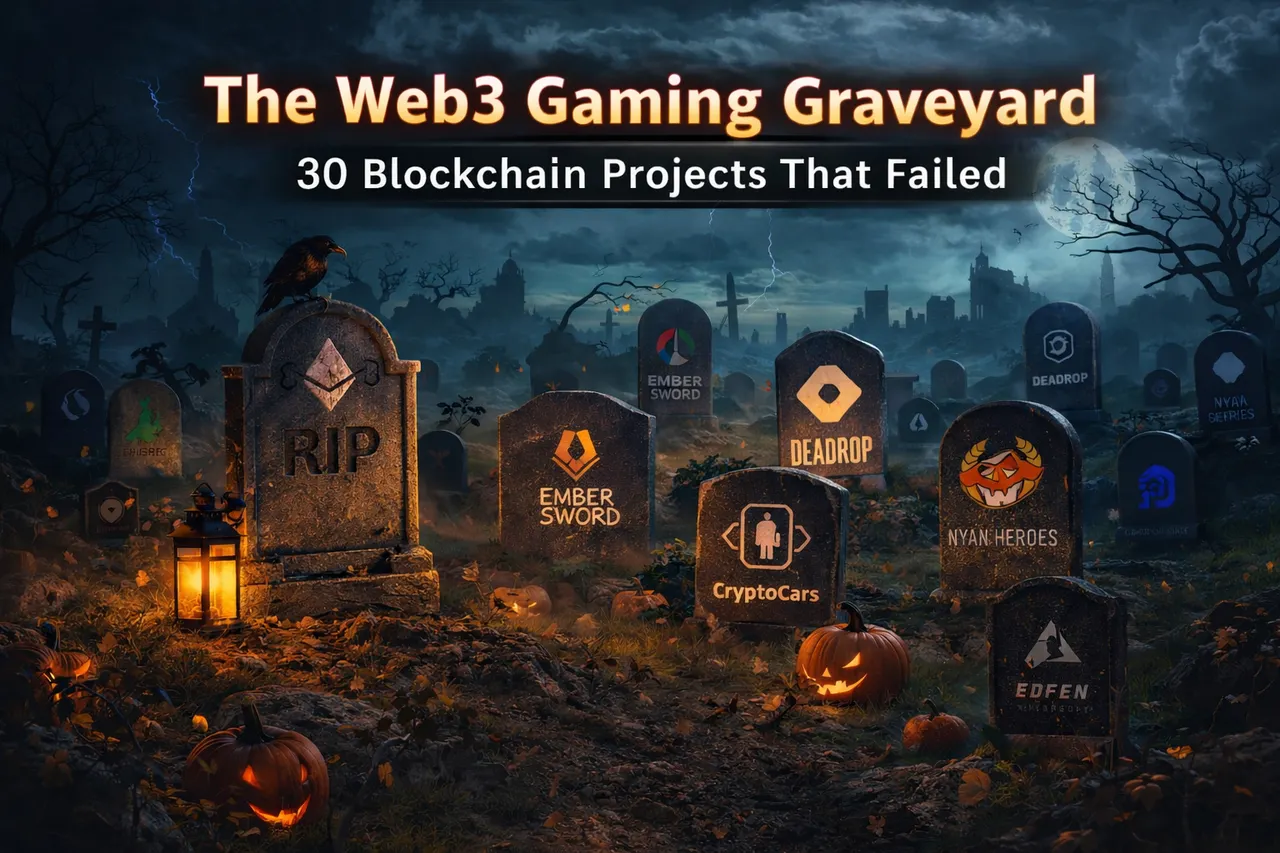
30 Metaverse and Blockchain Gaming Projects That Failed — And What Happened
The metaverse once promised a new era of gaming — player-owned economies, interoperable assets, and virtual worlds where digital property could rival real-world value. What it became, in too many cases, is a Web3 gaming graveyard.
Between 2020 and 2023, investors poured billions of dollars into Web3 gaming startups. But as the crypto market cooled and the hype cycle faded, many of those projects quietly disappeared.
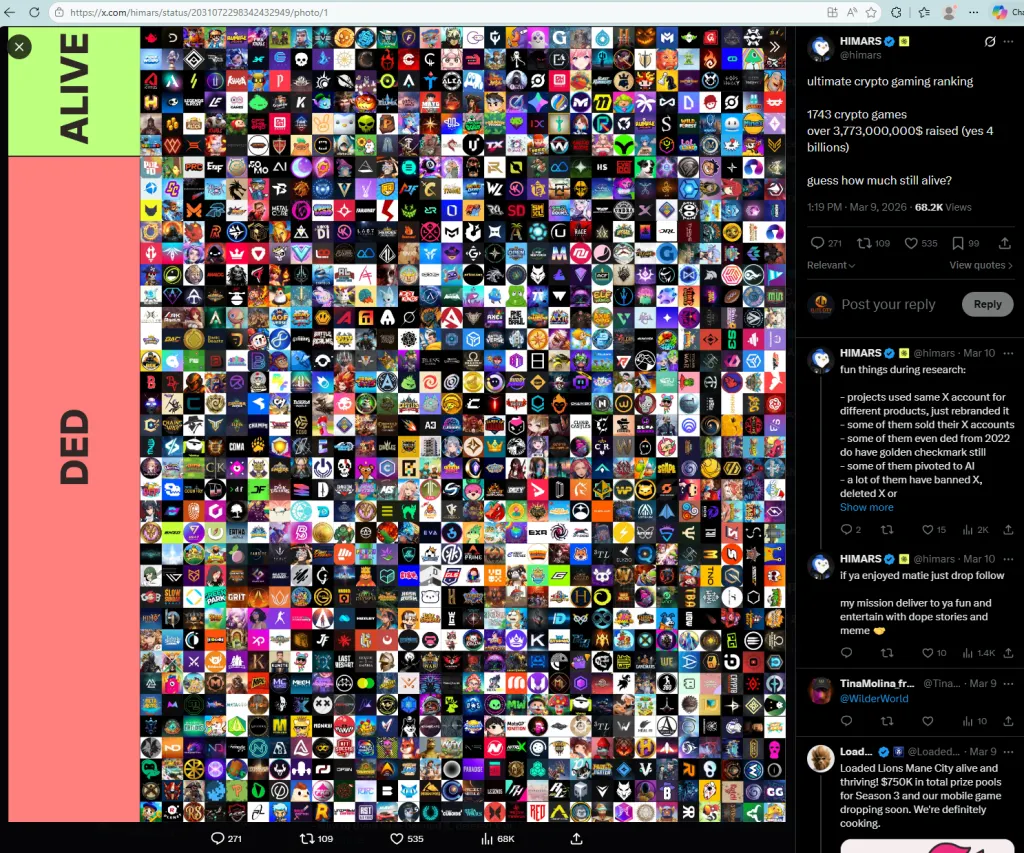
A recent viral analysis from crypto researcher @himars on X highlighted the scale of the shakeout. After reviewing 1,743 crypto gaming projects that collectively raised over $3.7 billion, the majority of them are now inactive, abandoned, or pivoted away from blockchain gaming entirely.
The result is a growing graveyard of failed Web3 games.
But looking at these projects also reveals important lessons about what works — and what doesn’t — in the metaverse.
Why So Many Web3 Games Failed
Before diving into the list, it’s worth understanding the core reasons so many projects collapsed.
1. Tokenomics Over Gameplay
Many Web3 games launched with a focus on tokens and NFTs rather than actual gameplay.
When token prices dropped, players left.
2. Unsustainable Play-to-Earn Models
Early “play-to-earn” systems often relied on constant new players entering the ecosystem to fund rewards.
When growth slowed, the economies broke down.
3. Venture Funding Dried Up
When crypto markets cooled in 2022–2024, funding for blockchain gaming studios dropped sharply.
Many teams simply ran out of money.
4. Development Complexity
Building an MMO or open-world game is already difficult.
Adding blockchain infrastructure made it even harder.
30 Web3 and Metaverse Projects That Shut Down
Below are examples of blockchain games that either shut down completely, pivoted away from Web3, or halted development.
(Note: Some of these games may still technically exist in limited form but are largely inactive or abandoned.)
Major Shutdowns
Ember Sword
A highly anticipated blockchain MMORPG that sold virtual land NFTs before eventually shutting down development in 2025.
Deadrop
A Web3 shooter tied to NFT “founder passes” that collapsed after internal controversy and declining player interest.
Nyan Heroes
A Solana-based shooter with heavy hype that struggled to maintain momentum.
Mystery Society
A Web3 social deduction game that ultimately ceased development.
Pixiland
Originally built on the Ronin blockchain but pivoted away from crypto features due to market conditions.
Abandoned or Stalled Metaverse Projects
6. Blankos Block Party
7. Big Time (early blockchain model pivoted)
8. The Walking Dead: Empires
9. MetaOps
10. Superior
Many of these games either removed NFT features or shifted to traditional game models.
Smaller Web3 Projects That Disappeared
11. CryptoCars
12. CryptoPlanes
13. CryptoMines
14. Dragonary
15. Space Misfits
Several of these projects experienced rapid token collapses that destroyed their in-game economies.
Early Play-to-Earn Experiments
16. Farmers World
17. My DeFi Pet
18. Plant vs Undead
19. CryptoBlades
20. StepHero
These games were popular during the early play-to-earn boom but could not sustain long-term player engagement.
NFT Metaverse Experiments That Lost Momentum
21. Netvrk
22. Star Atlas (development delays)
23. Illuvium (long development cycle challenges)
24. VulcanVerse
25. Decentral Games ICE Poker
Many of these projects still technically exist but saw major declines in activity after the NFT boom faded.
Projects That Pivoted Away From Web3
26. Gala Games titles that removed NFTs
27. Ubisoft Quartz experiments
28. Square Enix NFT experiments
29. Traditional studios exploring then abandoning NFTs
30. Multiple indie blockchain game studios that shut down quietly
Even large gaming companies tested blockchain features — and many backed away after negative player feedback.
The Harsh Reality Behind the Web3 Gaming Graveyard
The early Web3 gaming narrative suggested millions of players would earn full-time incomes through play-to-earn games.
In reality:
- Most blockchain games had fewer than a few thousand daily players
- Many token economies depended on constant speculation
- Development timelines for AAA games proved far longer than expected
But the collapse of early projects doesn’t mean the concept itself is dead.
The Survivors: Web3 Games Still Standing
Despite the shakeout, several projects continue to operate and build communities.
Axie Infinity
Once the flagship play-to-earn game, Axie has shifted toward a more sustainable ecosystem on the Ronin blockchain.
Gods Unchained
A competitive blockchain card game that still maintains active tournaments and updates.
Sorare
A fantasy sports platform that partnered with major soccer leagues and continues to grow.
The Sandbox
One of the few large metaverse platforms still hosting events and partnerships.
Wilder World
An ambitious metaverse project focused on photorealistic environments and digital asset ownership.
A Healthier Industry May Be Emerging
The early Web3 gaming wave was full of experimentation — and many failures.
But that experimentation also helped the industry learn critical lessons:
- Games must be fun first
- Economies must be sustainable
- Blockchain should enhance gameplay, not replace it
The next generation of Web3 games appears to be moving in that direction.
Instead of thousands of speculative projects, we may see a smaller number of high-quality virtual worlds emerge.
Final Thoughts
The metaverse isn’t dead — but the hype bubble definitely burst.
What remains is a smaller, more realistic industry still trying to figure out how blockchain can actually improve gaming.
And just like the early days of the internet, many of the most important innovations may come after the first wave of failures.
The Web3 gaming graveyard is real.
But so is the next generation of builders still trying to make the metaverse work.