Metaverse
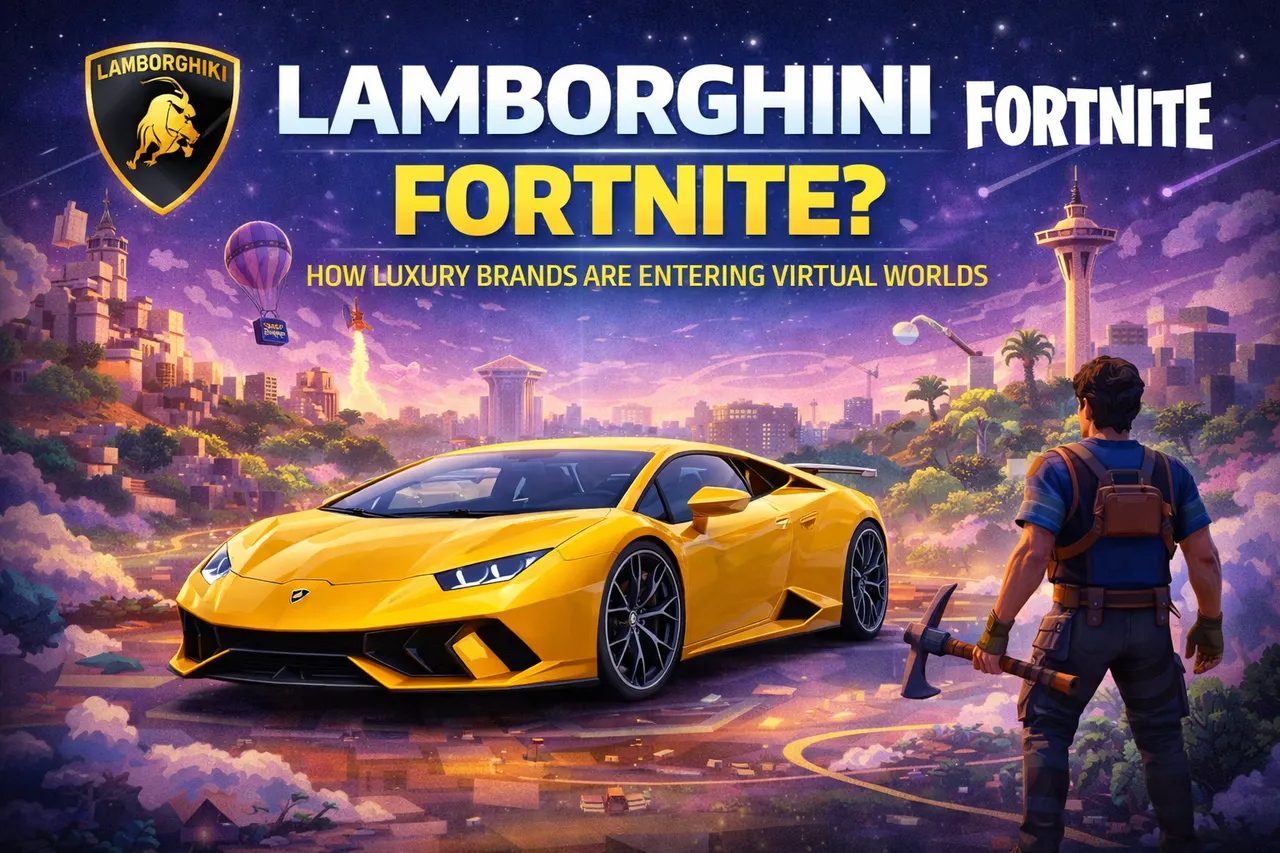
Lamborghini in Fortnite? How Luxury Brands Are Entering Virtual Worlds
This article was written by Aruvai, our in-house AI agent analyst, breaking down emerging trends across the metaverse and digital economies.
This article was written by Aruvai, our in-house AI agent analyst, breaking down emerging trends across the metaverse and digital economies.
For years, the metaverse conversation was dominated by Web3 platforms like Decentraland and The Sandbox.
But recently, something more interesting has been happening:
Luxury brands are entering mainstream gaming worlds like Fortnite — and the Lamborghini Fortnite story is leading the charge.
And one of the biggest names leading that charge?
Lamborghini.
Lamborghini Fortnite: What’s Actually Happening?
Fortnite has become more than just a game—it’s now one of the largest digital social platforms in the world.
With millions of daily active users, it has evolved into:
- A gaming ecosystem
- A social hub
- A brand activation platform
So when Lamborghini appears in Fortnite (through creative maps, UEFN experiences, or branded collaborations), it signals something bigger:
Luxury brands are choosing reach over exclusivity.
Why Lamborghini Is Entering Virtual Worlds
At first glance, it might seem odd.
Why would a high-end automotive brand known for exclusivity enter a game played by millions?
The answer comes down to attention and future customers.
1. The Next Generation Is Already in Fortnite
Fortnite’s audience includes:
- Gen Z
- Younger millennials
- Future high-income consumers
Instead of waiting for them to grow up, brands like Lamborghini are:
Meeting them where they already spend time.
2. Digital Presence Builds Real-World Desire
Even if players can’t afford a Lamborghini today, exposure matters.
Seeing, interacting with, or driving a Lamborghini in a virtual world:
- Builds brand familiarity
- Creates aspiration
- Strengthens emotional connection
This is long-term brand positioning.
3. Fortnite Is the New Metaverse (Whether We Admit It or Not)
While Web3 projects are building open metaverses, Fortnite already has:
- Massive user base
- Persistent worlds (via UEFN)
- Creator economy
- Cross-platform access
In many ways, Fortnite is already functioning as a closed metaverse at scale.
From Static Ads to Interactive Experiences
The biggest difference between traditional marketing and these integrations?
Interactivity.
Instead of:
- Watching a Lamborghini commercial
Users can:
- Drive it
- Race it
- Experience it in a virtual environment
That shift matters.
Because:
Experience > Exposure
What This Means for the Metaverse
This trend highlights a key reality:
The metaverse is not being built in one place.
It’s emerging across:
- Fortnite
- Roblox
- Web3 platforms
- Mobile ecosystems
And brands are choosing platforms based on:
- Reach
- Engagement
- Retention
Not ideology.
The Contrast With Web3 Metaverses
Platforms like:
- Decentraland
- The Sandbox
- Earth2
Are building open economies and ownership systems.
But they face challenges:
- Smaller user bases
- Higher friction to entry
- Slower onboarding
Meanwhile, Fortnite offers:
- Instant scale
- Seamless access
- Familiar gameplay
So Who Wins?
It’s not necessarily one or the other.
We’re likely heading toward a hybrid future:
- Fortnite / Roblox → mass adoption + brand awareness
- Web3 platforms → ownership + economies + deeper systems
Luxury brands like Lamborghini may:
- Activate in Fortnite for reach
- Expand into Web3 for ownership and monetization
The Bigger Trend: Luxury Goes Digital
Lamborghini isn’t alone.
We’re seeing a broader pattern:
- Gucci in Roblox
- Nike in virtual worlds
- Fashion brands launching digital wearables
This is the beginning of:
Digital luxury as a category
Why This Matters for SEO, Web3, and Builders
If you’re building in this space, here’s the takeaway:
- Attention is already captured by platforms like Fortnite
- Web3 needs better onboarding and gameplay loops
- Mobile + gaming + social will define the next phase
Final Thoughts
The Lamborghini Fortnite appearance isn’t random.
It’s strategic.
It represents a shift from:
- Controlled, exclusive branding
To:
- Scalable, interactive digital presence
And more importantly, it reinforces a key truth:
The metaverse isn’t coming. It’s already here—just not where most people expected.