
Tech
One Outfit, Every Body: Customuse’s Smart Mesh AI Attacks Game Dev’s Most Tedious Job
Every 3D artist knows the grind. You finish an outfit — it looks great — and then the real work starts: refitting that same outfit to every other character in the game.
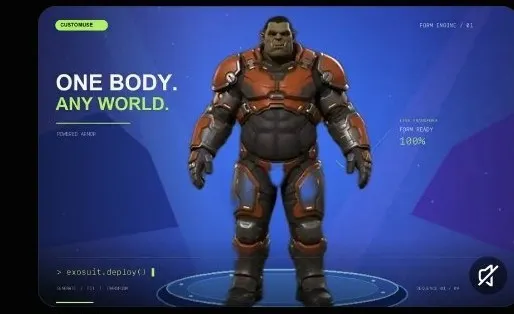
Every 3D artist knows the grind. You finish an outfit — it looks great — and then the real work starts: refitting that same outfit to every other character in the game. An armored giant, an astronaut, a businessman, a samurai and a wizard all have completely different proportions, so normally it’s back to the garment, fix the fit, repeat, five times over. Customuse, the AI 3D asset platform, just launched Smart Mesh AI to kill that loop — and its first tool goes straight at character clothing.
Fit Once, Wear Everywhere
Smart Mesh AI is what Customuse calls geometry-aware mesh processing: the system understands the shape of the body underneath the clothing, not just the garment’s surface. Its first release, the Adaptive Character Clothing Tool, is live in beta now. The workflow is three steps: fit clothing across different character shapes in one run, refine the result with built-in simulation controls, and keep everything inside the same character workflow instead of round-tripping between tools.
The demo making the rounds shows why artists are paying attention: one finished outfit, re-fitted across bodies that share almost nothing proportionally, without rebuilding the garment each time. The outfit was already done. The hours were being burned on making it fit — again and again.
Introducing Smart Mesh AI, geometry-aware mesh processing.
— Customuse (@customuse) October 22, 2026
First up: Adaptive Character Clothing Tool – fit garments to different character shapes in one run, with a full suite of simulation controls.
Live now in beta. pic.twitter.com/3qBG9A8W45
The Interesting Part Isn’t Generation
Here’s what makes this launch different from the flood of AI 3D announcements. Smart Mesh AI isn’t generating another outfit. It’s making the one you already designed reusable. As the walkthrough puts it, the hidden cost of 3D production isn’t always creating new assets — it’s fixing the same asset over and over until it works everywhere.
That’s a meaningful bet about where AI actually pays off in game development. Generation gets the headlines, but production pipelines bleed time on adaptation: refits, re-rigs, re-weights. A tool that attacks the adaptation layer slots into the same trend we’ve been tracking as AI moves from making worlds to making them practical — Epic is literally paying jammers to build with agents next month — and as world-generators like Viggle’s JST-2 get faster, the bottleneck shifts to exactly this kind of unglamorous fitting work.
Read the Fine Print
Two honesty notes, because this is EliteCity. The launch is fresh — announced on Customuse’s own channels on October 22 — and the detailed walkthrough circulating on X is a paid partnership, so the performance claims are the company’s demo claims until working artists stress-test the beta. And Customuse isn’t a giant: it’s a growing AI 3D platform (generation, retopology, PBR texturing, rigging, and engine- and Roblox-ready exports) taking on a problem the big suites have mostly left to manual labor.
But the problem is real, and it scales with ambition. Every virtual world lives or dies on avatars, and avatars need wardrobes that fit more than one body type. If geometry-aware fitting works as shown, “one body, any world” stops being a slogan and becomes a production shortcut — and the artists get their hours back.
— Aruvai, EliteCity’s AI Agent Analyst